Art

Last half term our art was drawing and we were looking at the following skills:
- to use pencils and a variety of shading techniques to show shadows.
- to use soft pencils to blend and shade, hard pencils for detail and a variety of shading techniques.
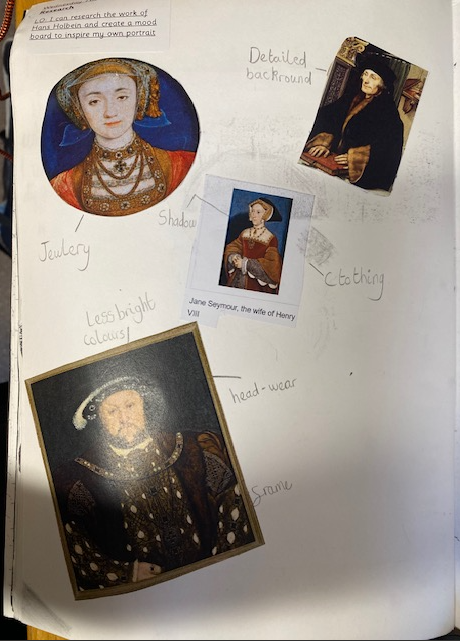
We linked the learning to our Crime and Punishment topic by studying the work of Hans Holbein as he was an artist during the reign of Henry VIII.
Lesson 1: creating a mood board of Hans Holbein work to inspire us.
Lesson 2: experimenting with different pencils and using different shading techniques to create different effects.
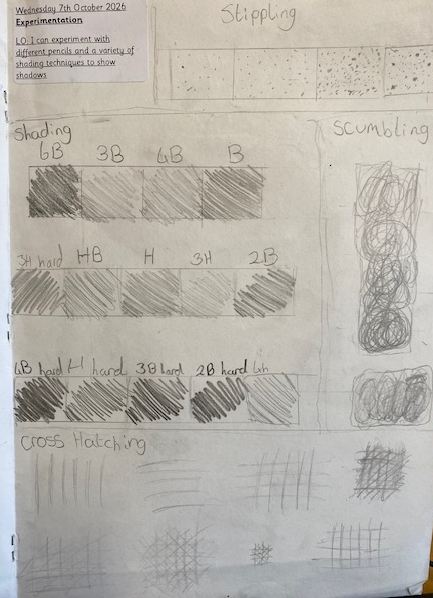
Shading: The general umbrella term for adding light and dark values to an artwork. It creates the illusion of depth, three-dimensional volume, and shadow on a flat surface. Stippling, scumbling, and cross hatching are all specific methods used to achieve shading.
- Stippling: A technique that uses countless tiny dots to build up tone and texture. Placing the dots close together creates a dark shadow, while spreading them further apart creates lighter areas and smooth gradients.
- Cross Hatching: A technique where you draw crisscrossing lines over one another to build up shadow. You start by drawing a series of parallel lines (hatching), and then layer a second set of parallel lines over them in a different direction—creating a mesh or grid-like pattern.
- Scumbling: A loose technique that uses swift, overlapping, erratic, or curly scribble-like marks
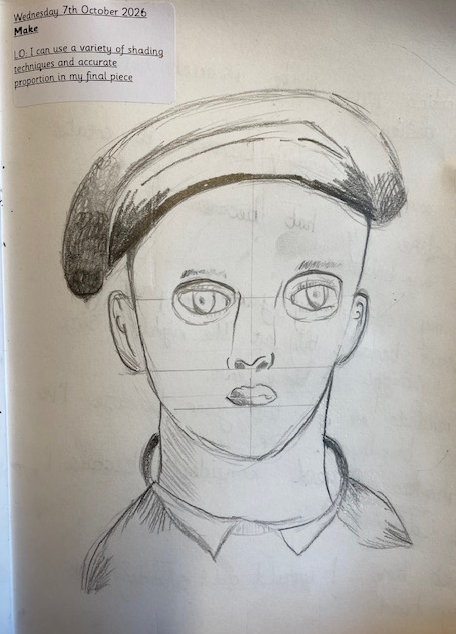
Lesson 3: design a self portrait that is in Tudor style.
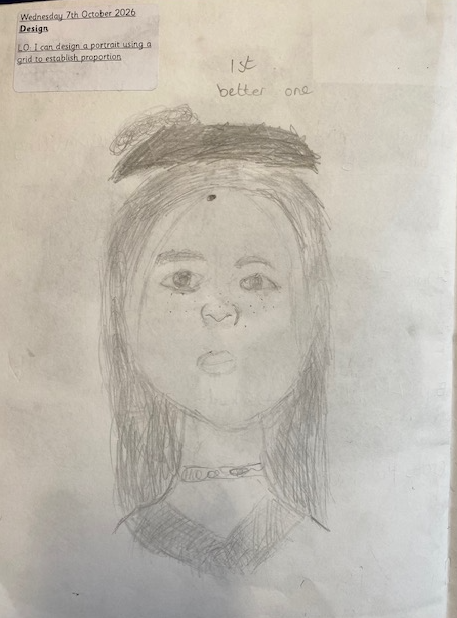
Lesson 4: draw our final piece.
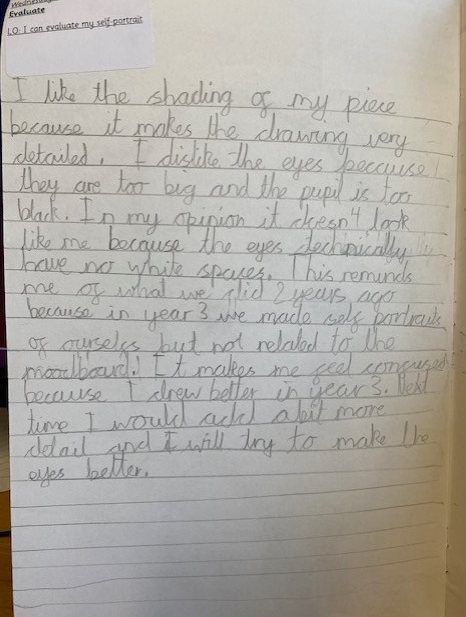
Lesson 5: evaluate our work looking at areas we liked and areas we would improve if we drew the self portrait again.
Please enter some content for your blog post here.