Maths
Our maths lead is Craig Butler.
"Maths was always my favourite subject at school — I loved the logic, the patterns, and the satisfaction of solving problems. But I was always curious why some people found it easy while others struggled. That question has shaped my passion for teaching maths and drives my belief that every child can succeed.
As Maths Lead, I champion our school's vision of teaching through Concrete, Pictorial, and Abstract (CPA) methods, ensuring all learners build deep understanding. With a mastery approach at the heart of our curriculum, we aim to make maths accessible, meaningful, and enjoyable for every child."
Vision
At Beckers Green, we believe that every child can succeed in mathematics. Our vision is to develop confident, resilient learners who understand that maths is a vital life skill and a powerful tool for making sense of the world.
We are committed to a mastery approach, where all children are given the time and support to develop a deep, secure understanding of mathematical concepts. Mastery means that children not only know how to do maths, but also understand why it works, and can apply their knowledge in a range of contexts.
Our teaching is rooted in the Concrete–Pictorial–Abstract (CPA) approach:
- Concrete: Children begin by exploring mathematical ideas using physical resources and manipulatives. This hands-on experience helps them build strong foundations.
- Pictorial: Visual representations are used alongside concrete materials to help children make connections and solve problems.
- Abstract: With secure understanding, children move to abstract methods, supported by their concrete and pictorial experiences.
We believe that maths is for everyone. Our inclusive curriculum nurtures curiosity, encourages reasoning, and develops problem-solving skills that are essential for life beyond the classroom. Every child is supported to achieve mastery, ensuring they are ready for the next stage of their learning journey.
Beckers Green is currently using White Rose materials to support a mastery approach to the teaching and learning of mathematics. The planning has number at its heart, with a large proportion of time spent reinforcing number to build competency.
The planning also ensures teachers stay in the relevant Key Stage to support depth of knowledge of each topic, while providing opportunities to build reasoning and problem-solving elements into the curriculum. The White Rose curriculum for each year group can be seen below. For specific children/small groups, we utilise the NCETM curriculum prioritisation materials for short periods, this allows the adults and children to focus instruction on the most vital foundational skills, giving core topics more instructional time earlier in the year. This ensures children build firm foundations before moving to harder concepts. Our vision is one of ‘keep up, not catch up’; this philosophy aligns with best inclusive practices. By using immediate interventions, we address gaps on the same day they happen, stopping misconceptions from compounding. Gamified and structured programmes like Mastering Number, NumBots and Times Tables Rock Stars (TTRs) build the essential fluency that makes this model possible. The Mastering Number scheme is being used by EYFS and KS1 as part of their daily practice. This builds strong early number sense and fluency, focuses on deep understanding and not just procedures, uses clear structures to prevent misconceptions, improves confidence and mathematical talk and lays firm foundations for later maths success.
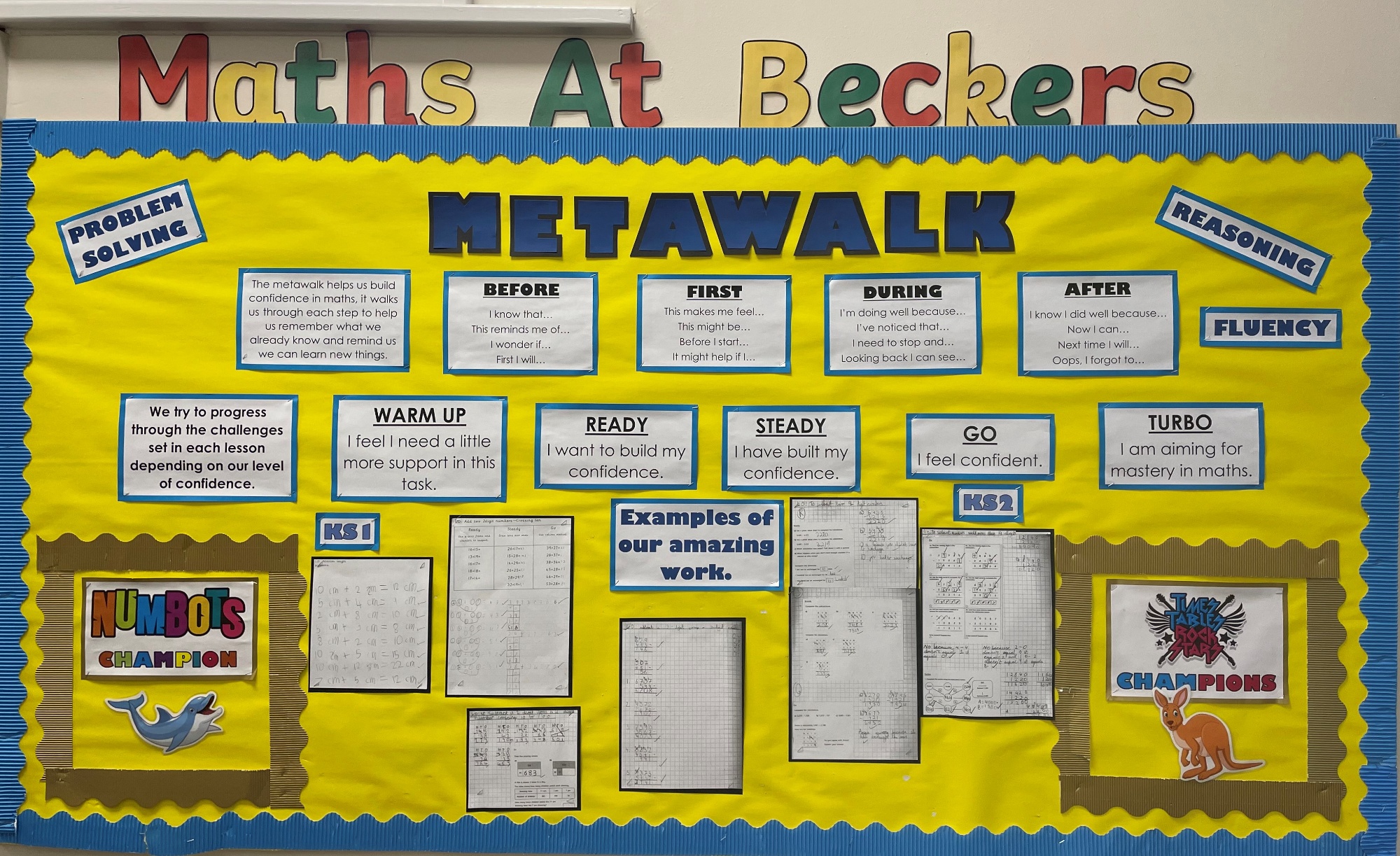
We encourage children to become independent thinkers and learners through the use of choose and challenge each day. Children will experience 5 stages of each maths lesson: explore, model, shared practise, independent practise and reflect and challenge. During the ‘explore’ stage of learning children are given time to discuss, reason, make connections and prove their learning through open ended/discussion-based questions related to their learning. The teacher will then ‘model’ the learning before ‘shared practise’ where children will work through examples together (in their book) to refer back to later to help them during their ‘independent practise’.
During the ‘independent practise’, children will have the choice of ‘ready and steady’ challenges which will focus on fluency/varied fluency (most days). Children also have the option of starting on ‘warm up’ if they need further support. Following ‘independent practise’, the class will move onto the ‘reflect and challenge’ section of the lesson where the whole class will attempt problem solving/reasoning with the teacher modelling before moving onto ‘go and turbo’ to practise this independently. Therefore, the children gain confidence in the process they are learning and through continual reinforcement the learning will be embedded and reach the long-term memory.
The use of metacognition in maths is also a driving force to encourage children to become independent thinkers, each day they have to explain their level of understanding at different points throughout the lesson (First, Before and After stage) and then explain how they will further develop their understanding to make progress and be successful. Where possible, we aim to link new knowledge to existing knowledge they have previously acquired.
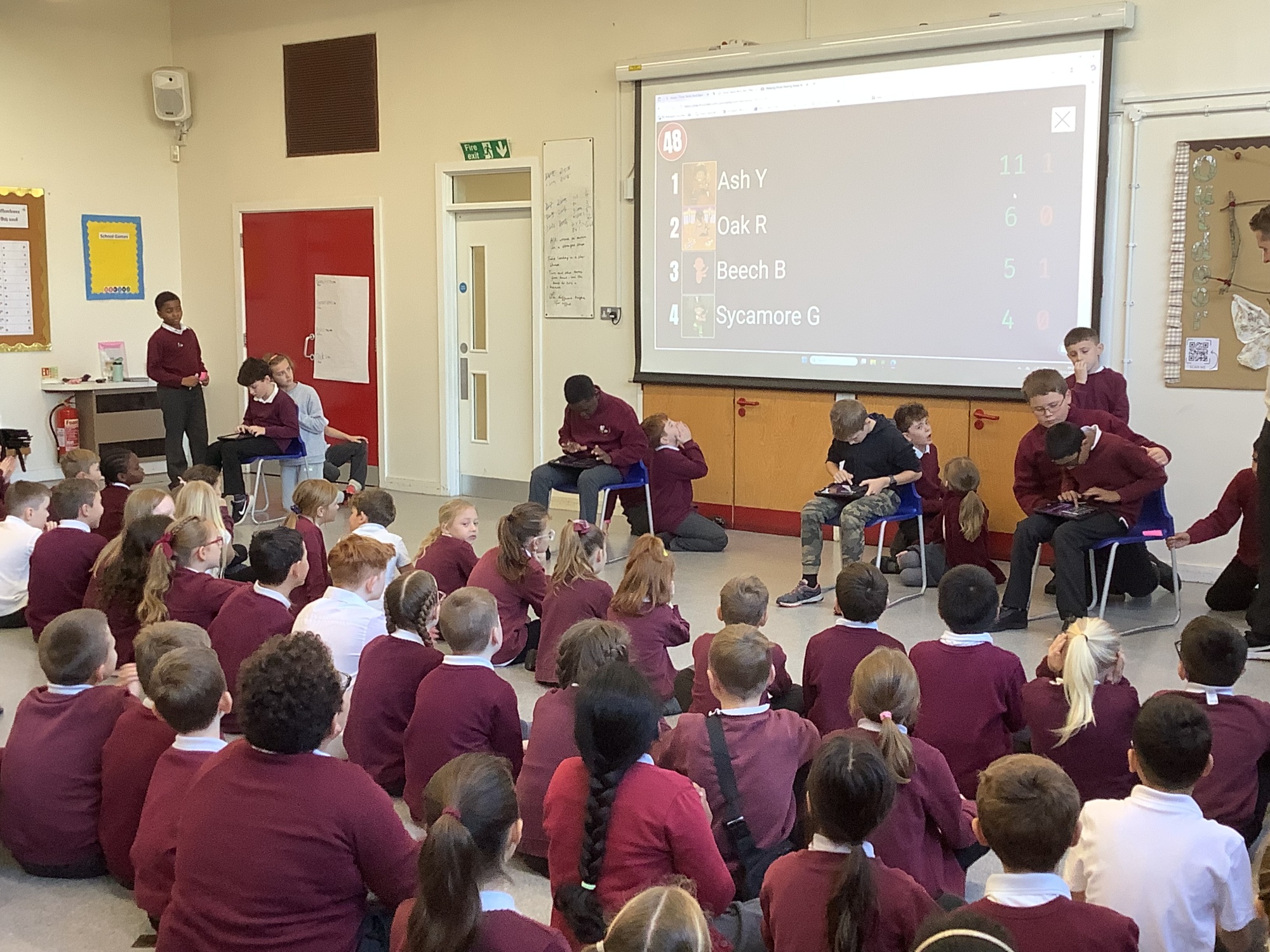
We encourage children to learn their times tables both in school and at home. Many enjoy the Rockstars app which can be found below by clicking on the link. Classes run competitions to improve speed and accuracy.
https://play.ttrockstars.com/auth/school

Well done to Beech house for winning this term's interhouse Times Table Rockstars event. (summer 2026)
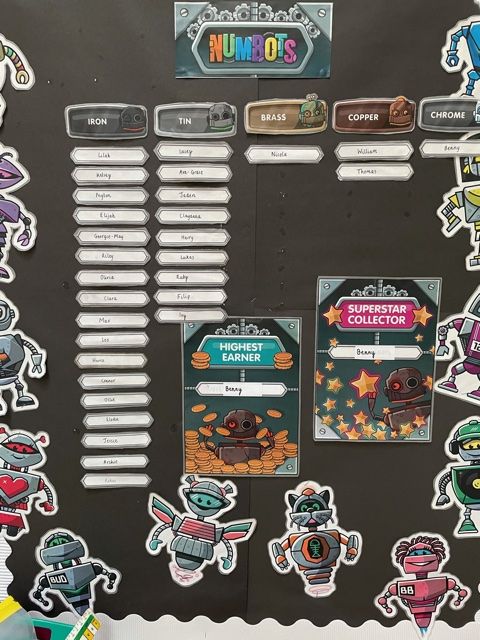
We also use the Numberbots app and run regular competitions to improve knowledge of number bonds. All children (especially when first developing their understanding of number) are encouraged to use Numbots as a driving force to gain a secure understanding before they move to more abstract concepts further up the school.
Please see information below which includes White Rose curriculum for each year group, our calculation polices, our intent, implementation and impact document and an evaluation of maths at Beckers Green (SEF).